
When we moved to Tenerife in 2022, I thought I’d seen the islands’ best natural spectacles. Then a Canarian friend mentioned casually over coffee: “You should see the almond blossom in Gran Canaria.” I nodded politely, thinking she meant a few pretty trees. She laughed at my face. “No, no. The whole mountain turns pink. It’s like snow, but warmer.” She was absolutely right, and I nearly missed one of the most magical sights in the almond blossom Canary Islands season.
Last February, we took a weekend trip to Gran Canaria specifically to see what all the fuss was about. The village of Tejeda sits high in the mountains, surrounded by ancient almond groves that burst into bloom when most of Europe is still frozen solid. It’s not the tropical paradise tourists expect from the Canaries—it’s something completely different and honestly more special.
Why almond trees bloom in the Canary Islands in winter
The first time someone told me about winter blossoms here, I was confused. Aren’t flowers a spring thing? But the climate in the higher altitudes of Gran Canaria creates this perfect microclimate where almond trees bloom as early as late January through February.
Our neighbor María, who’s originally from Gran Canaria, explained that her grandmother used to say the almond trees were “confused by the eternal spring.” The trees get just enough cool weather to trigger blooming, but the mild temperatures mean the blossoms last longer than they would on the mainland. It’s this weird sweet spot that makes the almond blossom Canary Islands experience so unique.
The tradition of almond cultivation here goes back centuries. Moorish settlers brought the trees, and they thrived in the volcanic soil of the highlands. Walking through Tejeda, you see trees that are genuinely ancient—gnarled trunks that have been producing blossoms for generations of Canarian families.
Tejeda: the heart of almond country
Tejeda isn’t just pretty—it’s been named one of Spain’s most beautiful villages, and when you arrive during almond season, you understand why immediately. The village clings to the mountainside at about 1,050 meters above sea level, with views that make you stop walking mid-sentence.
We drove up from Las Palmas (about an hour’s drive on winding mountain roads that had my middle daughter slightly green). The moment we rounded a particular bend and saw the valley below covered in what looked like pink and white clouds, I actually gasped. Gábor had to pull over because I was making him stop every thirty seconds for photos anyway.
The village itself is tiny—maybe 2,000 residents—but it’s the surrounding countryside that steals the show during almond blossom season. Terraced hillsides covered in almond groves create this layered effect of pink against the red volcanic rock and deep green pine forests higher up.
The Fiesta del Almendro en Flor
The Almond Blossom Festival happens annually, usually in late January or early February depending on when the blooms peak. We timed our visit for the festival weekend, which turned out to be both brilliant and slightly overwhelming.
The festival started in the 1970s as a celebration of Canarian and Latin American folklore. A local woman at the tourist office told us it was originally meant to strengthen cultural ties between the Canaries and South America. Now it’s evolved into this beautiful mix of traditional music, dance performances, craft markets, and of course, every almond-based food you can imagine.
We watched folklore groups from different countries perform in traditional costume in the village square. My oldest daughter, who normally rolls her eyes at “tourist stuff,” was genuinely captivated by the Venezuelan dance troupe. The atmosphere was festive but not commercialized—it still felt like a local celebration that tourists were welcomed to join, not a show put on for tourists.
Where to see the best almond blossoms
Everyone goes to Tejeda village center, which is lovely. But a Canarian couple we met at our hotel shared their secret spots, and I’m forever grateful.
The walk to Roque Bentayga
This ancient volcanic rock formation is sacred in Guanche culture (the indigenous people of the Canaries), and the path leading to it passes through some of the densest almond groves we saw. The contrast between the delicate pink blossoms and the imposing dark rock is stunning.
The walk takes about 45 minutes from the interpretation center, and it’s moderate difficulty. We did it with our 9-year-old without problems, though she complained about being hungry approximately seventeen times. Pack snacks and water—there’s nothing up there.
The road between Tejeda and Artenara
This scenic drive (GC-210) winds through almond country with viewpoints that don’t appear in most guidebooks. We stopped at least five times just to stare. The road is narrow and twisty, so don’t attempt it if you’re nervous about mountain driving. But if you’re comfortable, it’s absolutely worth it.
One viewpoint near Cruz de Tejeda offers panoramic views across the valley with almond groves in the foreground and Teide visible on Tenerife in the distance on clear days. We got lucky with perfect visibility and the photo I took there is now framed in our living room.
Los Almendros neighborhood
Just outside Tejeda village proper, this residential area is literally named “The Almond Trees” for good reason. Walking the small streets here during bloom season feels like moving through a pink tunnel. It’s quieter than the village center and locals seemed genuinely pleased to see people appreciating their trees.
An elderly man tending his garden waved us over and pointed out his oldest tree—he said it was planted by his great-grandfather. He didn’t speak much English and my Spanish is still embarrassingly basic, but his pride in that tree was completely clear.
What to eat during almond season
The almond blossom Canary Islands experience isn’t complete without trying the local almond products. Tejeda is famous for its bienmesabe, a sweet almond cream that Canarians use in desserts or eat straight with a spoon if they’re being honest.
We stopped at Dulcería Nublo, a traditional sweet shop in Tejeda village that’s been making almond treats for decades. The owner explained their bienmesabe recipe hasn’t changed since her grandmother’s time—ground almonds, sugar, egg yolks, lemon zest, and cinnamon. We bought three jars to take home and they barely lasted a week.
The mazapán (marzipan) here is different from what I knew in Hungary—less sweet, more almond-forward, often shaped into traditional Canarian designs. Our youngest daughter, who claims to hate marzipan, ate four pieces before I noticed.
Restaurant recommendations
Restaurante El Refugio in Tejeda served us the best meal of the trip. Their almond soup (sopa de almendras) sounds weird but tastes incredible—creamy, slightly sweet, with crispy almond slivers on top. They also do rabbit in almond sauce, which is a traditional Canarian dish that Gábor still talks about.
Book ahead during festival weekend. We didn’t, and ended up eating at 4 PM because everything was packed. Not the worst problem to have, but worth noting.
Practical tips for visiting
Here’s what I wish someone had told us before our first almond blossom trip to Gran Canaria.
Timing is everything
The bloom period is short—usually three to four weeks maximum. It varies year to year depending on weather, but generally peaks in early to mid-February. The local tourism board posts updates on their website about bloom status, which is genuinely helpful for planning.
We went during the festival weekend, which was amazing but crowded. If you prefer quieter experiences, visit on a weekday or the weekend before or after the main festival. The blossoms don’t care what day it is.
Weather in the mountains
This caught us off guard. Down at sea level in Las Palmas, it was 22°C and sunny. Up in Tejeda, it was 12°C and windy. I’d packed for beach weather because, well, Canary Islands. Rookie mistake.
Bring layers. The temperature drops significantly with altitude, and mountain weather changes quickly. We saw sun, clouds, and light rain all in one afternoon. Also, proper walking shoes—the terrain is rocky and uneven in many viewing areas.
Getting there and parking
You really need a car to explore almond country properly. The bus service exists but is limited and won’t get you to the best viewing spots. We rented a small car in Las Palmas, which was perfect for the narrow mountain roads.
Parking in Tejeda village during festival weekend is nightmare-level difficult. We ended up parking about 15 minutes’ walk from the center. Go early (before 10 AM) or late afternoon for better chances. There’s a larger parking area near the tourist office that fills up fast.
Where to stay
We stayed at Hotel Rural Fonda de la Tea in Tejeda village itself. Small, family-run, absolutely charming. Our room had a balcony overlooking almond groves and the breakfast included local almond pastries. It’s not fancy, but it’s authentic and the owners are incredibly helpful with route suggestions.
Book months ahead for festival weekend—places fill up. We booked in November for February and got one of the last rooms. If Tejeda is full, look at Artenara or San Bartolomé de Tirajana nearby.
Beyond the blossoms
While the almond blossom Canary Islands spectacle is the main draw, Tejeda and the surrounding area deserve more time than just a blossom viewing.
The village has a small ethnographic museum that our middle daughter found surprisingly interesting. It covers Guanche culture and traditional Canarian life in the mountains. The woman working there gave us a 20-minute impromptu talk about ancient almond cultivation techniques that was genuinely fascinating.
Roque Nublo, another iconic rock formation, is a moderate hike from the Cruz de Tejeda area. We did this the day after our almond viewing and the trail passes through more groves. The rock itself is impressive—it’s one of the largest natural monoliths in the world, according to the information board.
Other villages worth visiting
If you’re spending a few days in the area, Artenara is the highest village in Gran Canaria and has cave houses carved into the cliffs. Some are still inhabited, others are now small museums or even a cave restaurant. It’s surreal and beautiful.
San Bartolomé de Tirajana, about 30 minutes from Tejeda, has its own almond groves and is much less touristy. We stopped there on our way back and had coffee at a local bar where we were the only non-Canarians. The almond cake the bartender’s mother had made was better than anything we’d bought in shops.
What tourists get wrong
The biggest mistake is thinking the almond blossoms are just in Tejeda village itself. The village is lovely, but the real magic is in the surrounding countryside. You need to walk or drive the rural roads to really experience it.
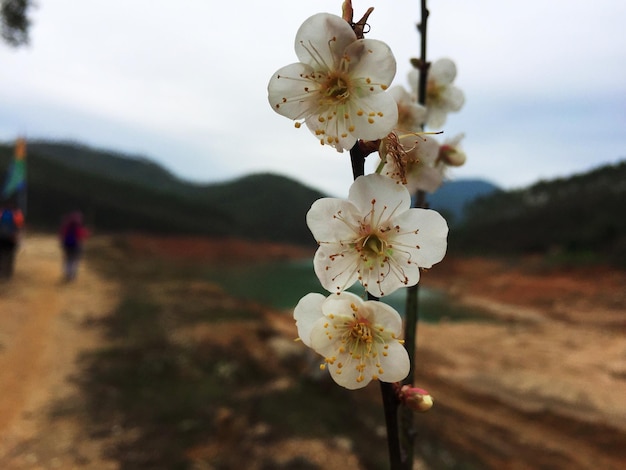
Also, people expect cherry blossom-level pink. Almond blossoms are more subtle—white with pink tinges, delicate rather than dramatic. They’re beautiful, but if you’re expecting Japan-level intensity, adjust your expectations. It’s a different kind of beauty.
Don’t try to do this as a day trip from southern Gran Canaria resorts. The drive is long and winding, and you’ll spend more time in the car than enjoying the blossoms. Either stay overnight or at least give yourself a full day without rushing.
Why this matters to Canarians
What struck me most during our visit was how much local pride centers around these almond groves. This isn’t just a pretty tourist attraction—it’s agricultural heritage, family history, cultural identity.
A man at the festival told us his family has worked the same almond terraces for five generations. The trees aren’t just crops; they’re living connections to ancestors. When tourists appreciate the blossoms, they’re appreciating something deeply meaningful to local communities.
The almond harvest later in the year is still important economically for mountain villages, even though it’s not as profitable as it once was. Supporting local businesses that use Canarian almonds—buying that bienmesabe, eating at restaurants that feature almond dishes—matters to these small communities.
We’re still learning about Canarian culture, still outsiders trying to understand the depth of tradition here. But experiencing the almond blossom season in Tejeda gave us a glimpse into a part of the islands that has nothing to do with beaches and resorts. It’s agricultural, traditional, quietly spectacular—and honestly, it’s the Canary Islands experience I’m most grateful we didn’t miss.