
When we first moved to Tenerife in 2022, I thought hiking Teide National Park would be like any other mountain trail back in Hungary. Just show up, start walking, maybe pack a sandwich. I was spectacularly wrong on multiple counts, and that naivety nearly cost us a planned family hike when I discovered—three days before—that you need permits for certain routes. Let me save you from making the same mistakes.
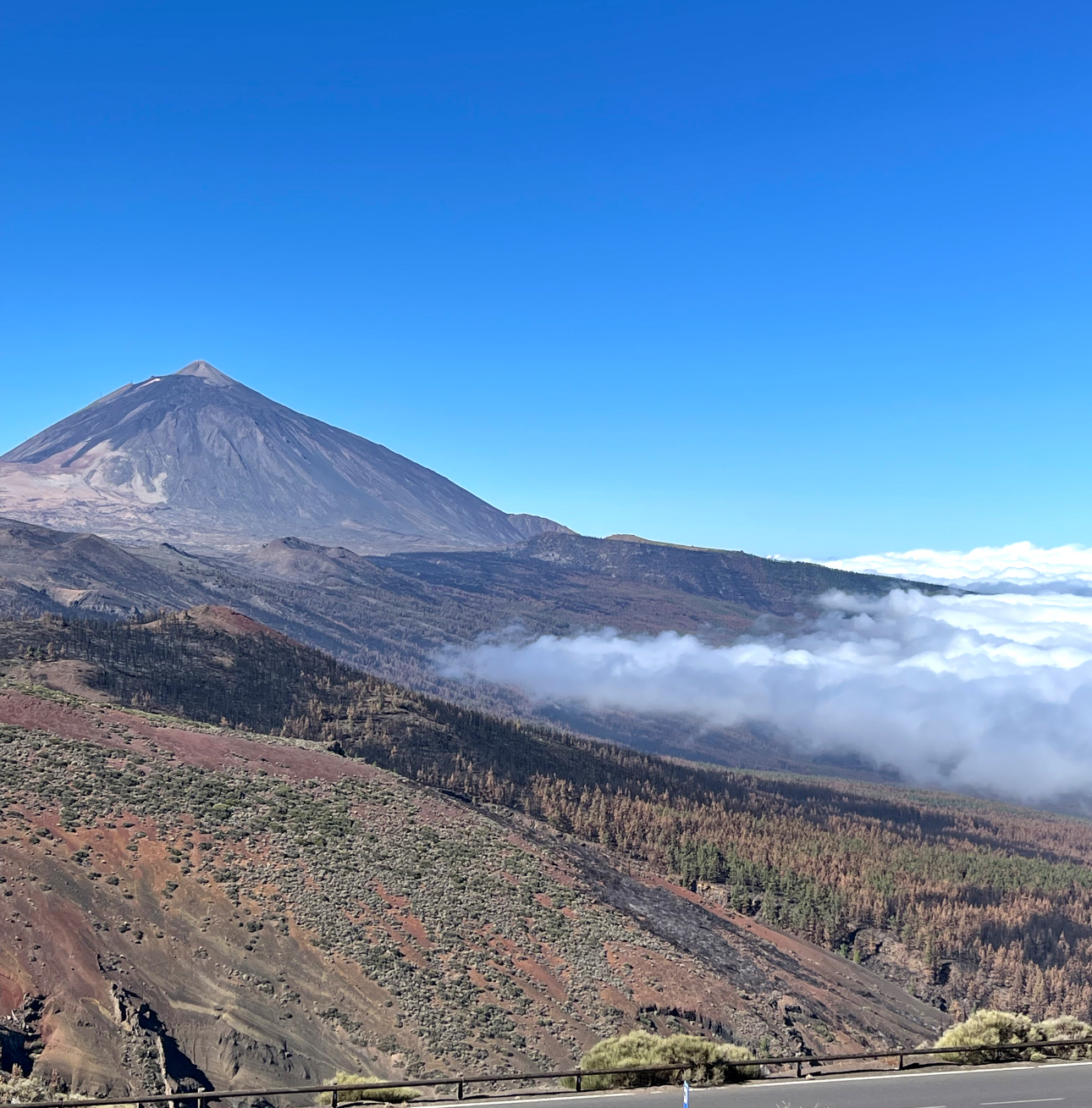
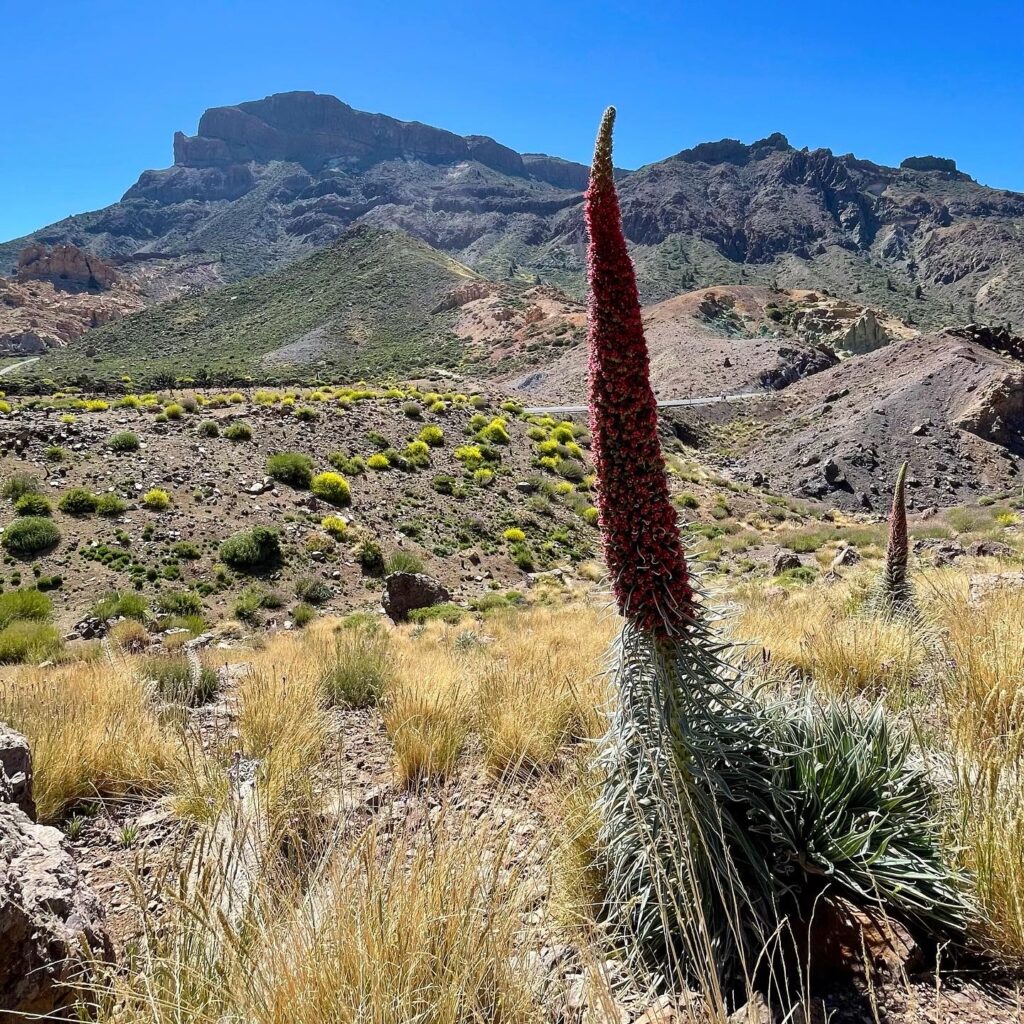
Teide National Park hiking isn’t just about lacing up your boots and heading out. It’s Spain’s most visited national park, a UNESCO World Heritage site, and home to the country’s highest peak at 3,715 meters. The landscape looks like Mars had a baby with Middle-earth, and yes, it’s as stunning as that sounds. But there are rules, realities, and local wisdom that guidebooks either skip or get wrong.
The permit situation nobody warns you about properly
Here’s what I wish someone had told me clearly: you need a free permit to hike the final stretch to Teide’s summit via Telesforo Bravo trail. This is the bit from the upper cable car station (La Rambleta at 3,555m) to the actual peak. The permits are free but limited to 200 people per day, and they book out weeks—sometimes months—in advance during peak season.
I learned this the hard way when planning our first big family hike. I’d read “you need a permit” but somehow my brain translated that to “you probably should get a permit” rather than “you literally cannot pass the checkpoint without one.” A park ranger very politely turned away a couple in front of us who’d taken the cable car up without booking. They’d traveled from Gran Canaria specifically for the summit. Heartbreaking to watch.
You book permits through the official national parks website, and you’ll need to select a specific time window. The system can be glitchy—I’ve had better luck booking in the evening rather than during peak daytime hours. You’ll need your passport or NIE number for each person in your group.
The alternative nobody tells you about
Here’s something our neighbor Carlos mentioned casually one evening that changed everything: most of Teide National Park hiking doesn’t require any permits at all. The summit permit is only for that final 200-meter stretch. There are dozens of trails throughout the park where you can just show up and walk.
The Montaña Blanca route, for example, takes you up to the base of the summit cone without any permits needed. It’s a proper hike—about 5-6 hours round trip—and you get incredible views without the permit stress. Our middle daughter (now 15) actually preferred this route because “it felt more real” than taking the cable car up.
Routes we’ve actually hiked with three kids
Living here means we’ve tried quite a few Teide National Park hiking routes, some more successfully than others. Here’s the honest breakdown.
Roques de García loop
This is the one everyone does, and for good reason. It’s a 3.5km loop that takes about 90 minutes at a leisurely pace. The rock formations look like giant fingers pointing at the sky, and there’s something called Roque Cinchado that apparently looks like a tree (I still see a thumbs-up emoji, but maybe that’s just me).
Our youngest daughter managed this easily at age 7, though she did ask to be carried for the last bit. The path is well-marked, mostly flat, and you get those iconic Teide photos. Go early morning or late afternoon—midday sun at this altitude is no joke, and the tour buses arrive around 11am turning the car park into chaos.
Montaña Blanca to the summit base
This is the route I mentioned earlier, and it’s become my personal favorite for Teide National Park hiking. You start at Montaña Blanca (2,350m) and climb to the base of the summit cone at about 3,550m. No permits, no cable car fees, just you and the mountain.
The trail is clear but relentless—1,200 meters of elevation gain over about 8.5km. We attempted this as a family once. Once. Our oldest loved it. Our middle daughter made it but complained the entire way down. Our youngest stayed with Gábor at a lower altitude trail while I took the older two up. Know your family’s limits.
The landscape shifts dramatically as you climb. You start in white pumice stone (hence Montaña Blanca—White Mountain), move through sections that crunch like walking on cornflakes, and eventually hit volcanic scree. At the top, you’re standing at the base of the summit cone, looking up at where the permit-holders continue.
Siete Cañadas trail
This one surprised us. It’s a longer, flatter walk (about 16km) that circles through the caldera—the massive crater that forms the heart of the national park. A German couple we met at our daughters’ international school recommended it, saying it’s where locals go when they want a proper walk without the tourist crowds.
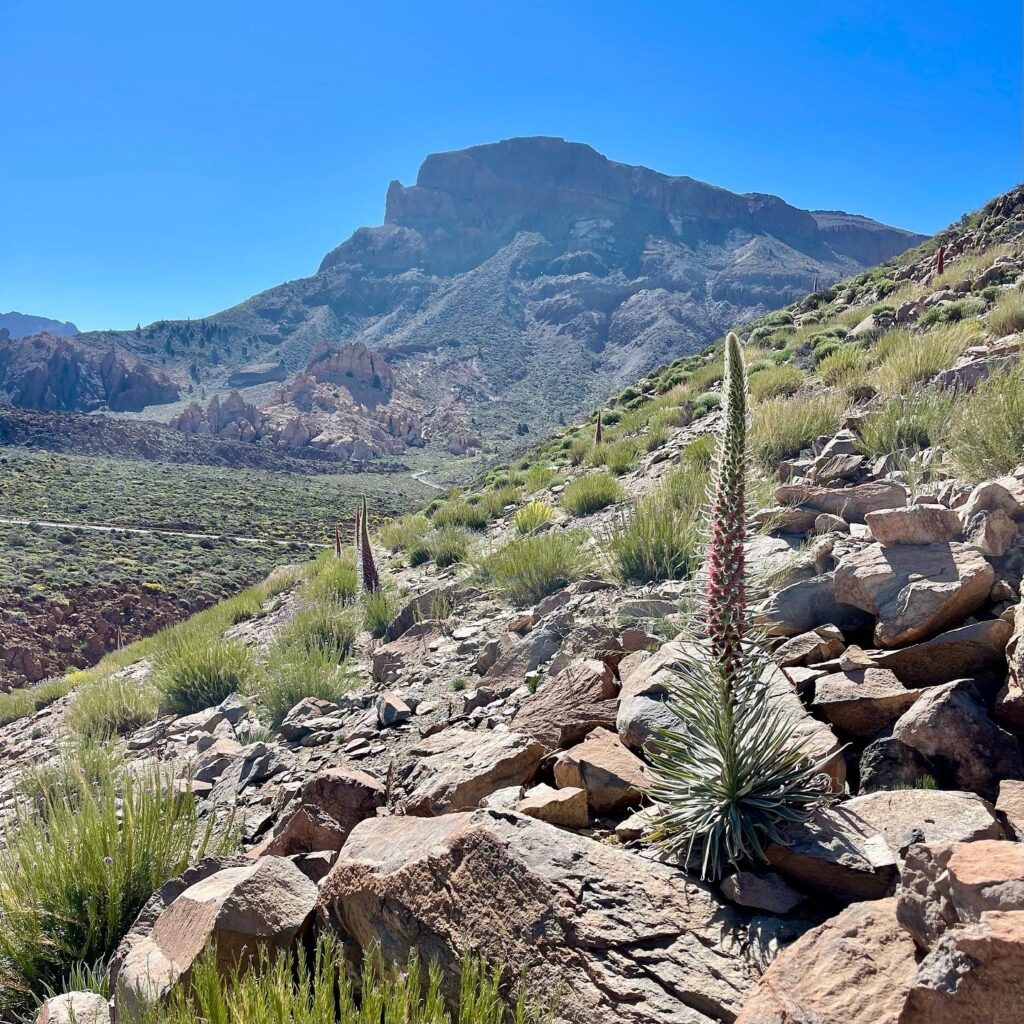
They were right. We saw maybe a dozen people the entire day, compared to hundreds on Roques de García. The trail takes you through different volcanic landscapes—yellow sulfur deposits, black lava fields, red iron-rich rocks. It’s like walking through a geology textbook, except our kids were actually interested because the colors are so dramatic.
Fair warning: there’s minimal shade and no facilities once you start. We learned to bring twice as much water as we thought we’d need. The altitude makes you dehydrate faster than you realize.
What locals actually know about Teide hiking
Living here rather than visiting means you pick up knowledge that doesn’t make it into guidebooks. María, our Canarian neighbor who’s been hiking Teide since she was a child, shared some wisdom over wine at a local guachinche.
Altitude hits harder than you think
The cable car base station sits at 2,356 meters. That’s already higher than most mountains in Europe. María told us that many tourists underestimate this because they drove up in a comfortable car. “Your body doesn’t care how you got here,” she said. “It still needs time to adjust.”
She recommended spending at least an hour at the cable car station before starting any serious Teide National Park hiking. Walk around slowly, let your breathing adjust. We ignored this advice once. Our middle daughter got a splitting headache within 20 minutes of starting a trail. Lesson learned.
Weather is its own character
The mountain creates its own weather system, and it can change frighteningly fast. We’ve started hikes in brilliant sunshine and been in cloud so thick we could barely see the trail markers within an hour. A local park ranger we chatted with said they do rescues weekly for people who got disoriented in sudden cloud cover.
Check the weather forecast, but also look at the webcams on the Teide cable car website. They update every few minutes and show you actual current conditions. If there’s cloud, it might burn off by midday, or it might settle in for days. The locals have a saying: “Teide decides when you climb it, not you.”
Winter hiking is genuinely different
Snow on Teide isn’t just a pretty photo opportunity—it completely changes the hiking conditions. We learned this when we tried a “quick walk” in January and found ice on trails we’d done easily in summer. The park sometimes closes trails entirely when there’s snow and ice, which makes sense after we saw someone slip and slide about ten meters down a slope (they were fine, just scared).
If you’re planning Teide National Park hiking between November and March, check trail conditions before you go. Some routes require proper winter hiking gear—not just warm clothes, but actual crampons and ice axes for certain sections.
The practical stuff that actually matters
Here’s the information I wanted when we first started exploring Teide, presented without the usual tourism fluff.
Getting there and parking
You can drive up—the roads are good and well-maintained. There are several car parks throughout the national park, and they’re free. The main ones are at El Portillo visitor center, Roques de García, and the cable car base station. Arrive before 10am or after 4pm to guarantee a spot during busy periods.
We tried the bus once (line 342 from Puerto de la Cruz). It works, but you’re locked into their schedule, which means either a very short visit or a very long day. With kids, having our own car gave us the flexibility to leave when someone got tired or grumpy.
The cable car reality
The Telesforo cable car costs €27 for adults (2024 prices) and takes you from 2,356m to 3,555m in about eight minutes. Book online in advance—it sells out, especially in summer and around holidays. The cable car can close for high winds with zero notice. We’ve had three planned trips cancelled because of wind.
If you’re doing Teide National Park hiking via the cable car route, the last car down is usually around 5pm, but check current times. Missing it means a very long walk down in the dark, which is both dangerous and prohibited.
What to actually bring
After multiple hikes, here’s what’s actually in our packs:
- Way more water than seems reasonable—at least 2 liters per person, more for longer hikes
- Sun protection that would make a vampire comfortable: high SPF sunscreen, hat, sunglasses, lip balm
- Layers—it can be 25°C at sea level and 5°C at the summit on the same day
- Proper hiking boots, not trainers (we learned this the hard way on loose volcanic scree)
- Snacks with actual calories—fruit doesn’t cut it at altitude
- A charged phone with offline maps downloaded
- Basic first aid kit including plasters for blisters
The visitor centers sell some supplies, but at tourist prices. Stock up before you drive up.
When to go (and when to absolutely avoid)
We’ve hiked Teide in every season now, and each has its character. Spring (April-May) brings wildflowers to lower elevations and generally stable weather. Summer (June-August) means crowds but reliable conditions—though it can get genuinely hot despite the altitude.
Autumn (September-October) is secretly the best time for Teide National Park hiking. The summer crowds thin out, temperatures are comfortable, and the light is incredible for photos. Winter brings snow and ice, which is beautiful but complicates hiking significantly.
Avoid weekends and Canarian public holidays if you want quieter trails. The park is hugely popular with locals, and for good reason—it’s their backyard, and they use it. We once went on a long weekend and the Roques de García trail looked like a shopping mall at Christmas.
Time of day matters more than you’d think
Early morning (starting by 8am) gives you cooler temperatures, clearer air, and that magical light photographers obsess over. The challenge is that if you’re staying on the coast, it’s about an hour’s drive up, so you’re looking at a 6:30am start.
We’ve done sunrise hikes twice. They were spectacular, but getting three kids up and ready at 5:30am required levels of parental determination I didn’t know I possessed. Worth it for the experience, but not something we do regularly.
Late afternoon works too, but be very aware of how much daylight you have left. The sun sets fast once it starts, and being on a trail in the dark is both dangerous and against park rules.
The mistakes we made so you don’t have to
That €3,000 in mistakes I mentioned in our move? Some of them happened on Teide. Not all financial, but all educational.
We once started a hike at 2pm in July. The combination of afternoon heat and altitude hit our middle daughter hard. We had to turn back after 30 minutes, and she felt awful for “ruining” the hike. It wasn’t her fault—it was mine for poor planning.
We underestimated how long a “short” hike would take with kids. Trail times are calculated for average adult pace. With children, add at least 50% more time, plus frequent stops for snacks, photos, and “I need the bathroom” moments (there are very few facilities on trails).
We didn’t book summit permits far enough in advance for our parents’ visit. They flew out specifically to hike Teide with us, and we couldn’t get permits. We did the Montaña Blanca route instead, which was actually better for their fitness level, but I still felt guilty about the planning failure.
What makes Teide National Park hiking special
Despite the permits, the altitude challenges, and the occasional family meltdown on a trail, Teide National Park hiking has become one of our favorite things about living in Tenerife. There’s something about being above the clouds, surrounded by volcanic landscape that looks like nowhere else on Earth.
Our oldest daughter, who’s now 20 and studying at university, says hiking Teide was when the island started feeling like home rather than just where we lived. She’s right. There’s a moment on most hikes when you stop, look around at the otherworldly landscape, and realize how extraordinary it is to have this on your doorstep.
The park is protected for good reason. The ecosystem is fragile, the landscapes are unique, and the volcanic geology tells stories going back millions of years. A Canarian friend once told us that locals see Teide as a guardian of the island—a protector watching over everything. After hiking here regularly, I understand that reverence. We’re still outsiders learning about this place, but Teide has a presence that’s hard to explain and impossible to ignore.
If you’re planning Teide National Park hiking, do your research, get your permits sorted early, respect the mountain’s power, and give yourself time to adjust to the altitude. The trails are stunning, the landscapes are unlike anywhere else, and the experience of standing at Spain’s highest point (permit allowing) or even just walking through the caldera is genuinely special.
Just maybe don’t start at 2pm in July. Trust me on that one.