
When we first moved to Tenerife in 2022, I thought I could figure out the papas arrugadas recipe from a quick Google search. How hard could it be? They’re wrinkly potatoes with salt, right?
Wrong. So spectacularly wrong.
My first attempt produced soggy, under-salted disappointments that my three daughters refused to eat. My second try created salt rocks that could’ve been used as doorstops. It wasn’t until our neighbor Carmen knocked on our door with a bowl of actual papas arrugadas—golden, wrinkled, perfectly salty—that I realized I’d been missing something fundamental.
She didn’t just give us the recipe. She came over one Saturday afternoon and showed me, step by step, what I’d been doing wrong. And honestly? It changed everything about how we eat in our house now.
Why papas arrugadas matter more than you’d think
Before I share the recipe that finally worked, let me tell you why these wrinkly potatoes became something of an obsession for me. It wasn’t just about getting a side dish right.
Papas arrugadas are everywhere in Canarian cuisine. They show up at every family gathering, every fiesta, every casual Sunday lunch. They’re served alongside fresh fish at the beach chiringuitos. They come with your order at guachinches. They’re the foundation of so many meals here.
When Carmen explained it to me, she said something that stuck: “These potatoes are like the islands themselves—simple on the outside, but you need to understand them to get them right.” She was talking about the volcanic soil, the specific potato varieties, the salt from the ocean. There’s actual history in this dish.
The traditional recipe dates back centuries, to when Canarian farmers would cook small potatoes in seawater because fresh water was too precious to waste. That salty crust isn’t just for flavor—it’s a preservation technique that kept potatoes edible longer in the island heat.
The three mistakes I made (so you don’t have to)
Let me save you from my embarrassing failures. Here’s what I got wrong before Carmen set me straight:
Mistake #1: Using the wrong potatoes
I grabbed regular white potatoes from the supermarket. Big ones, because I figured we needed to feed five people. Carmen actually laughed when I told her this.
“No, no, no,” she said, shaking her head. “You need papas bonitas or papas negras. Small ones. The skin is important.”
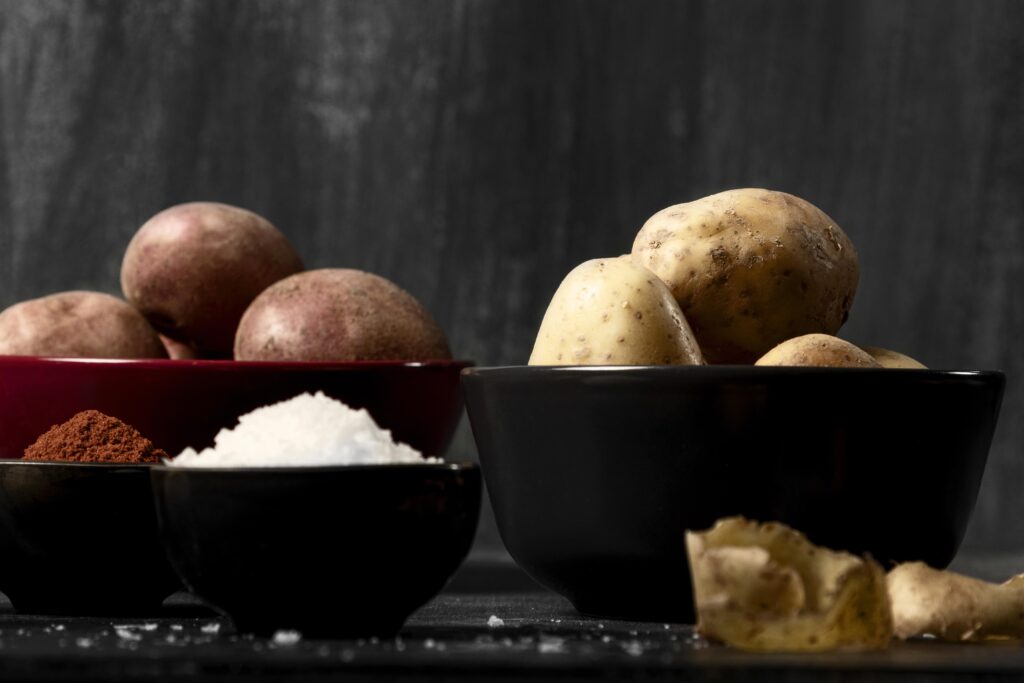
Papas bonitas are small, waxy potatoes with thin skin—they’re what most locals use. Papas negras are the traditional black potatoes from Tenerife, harder to find but incredible if you can get them. Both varieties hold their shape during cooking and develop that characteristic wrinkled skin properly.
Regular baking potatoes? They just turn into mush. The skin is too thick, the flesh too starchy. It doesn’t work.
Mistake #2: Not using enough salt (or using too much)
My first attempt, I used maybe two tablespoons of salt for a pot of water. It tasted like regular boiled potatoes with a slight salt flavor. Disappointing.
My second attempt, I overcompensated and created a Dead Sea situation. The potatoes came out encrusted in so much salt that even after brushing them off, they were inedible.
Carmen showed me the proper ratio: about 70 grams of coarse sea salt per liter of water. That’s roughly 1/3 cup per quart. It seems like a lot, but the potatoes don’t absorb all of it—the salt creates the crust during the drying phase.
Mistake #3: Stopping too soon
This was my biggest error. I thought once the potatoes were cooked through, I was done. I’d drain them, put them in a bowl, and serve them.
But the wrinkles—the arrugas that give these potatoes their name—don’t happen during boiling. They happen during the drying phase, which I’d completely skipped.
After draining the potatoes, you need to put them back in the hot pot, on very low heat, and let them dry out. This is when the magic happens. The remaining moisture evaporates, the salt crystallizes on the surface, and the skins wrinkle up into that distinctive texture.
The actual papas arrugadas recipe that works
Alright, here’s what Carmen taught me. This is the method I use now at least twice a week, and it works perfectly every single time.
Ingredients
- 1 kg small waxy potatoes (papas bonitas or papas negras if you can find them)
- 70 grams coarse sea salt per liter of water (about 1/3 cup per quart)
- Enough water to just barely cover the potatoes
That’s it. Three ingredients. The simplicity is deceptive.
Step-by-step method
Step 1: Don’t peel the potatoes. Just wash them thoroughly. The skin is essential—it’s what wrinkles. If there’s any dirt, scrub it off, but leave those skins intact.
Step 2: Choose potatoes of similar size. This ensures they cook evenly. Carmen uses potatoes about the size of a golf ball, maybe slightly larger. If you have a mix of sizes, save the bigger ones for something else.
Step 3: Put potatoes in a pot and add water. Here’s a key detail I missed initially—you don’t want too much water. Add just enough to barely cover the potatoes. Using less water means the salt concentration stays higher, which is what you want.
Step 4: Add the salt and stir. It should look like you’ve added way too much salt. That’s normal. The water should taste like the ocean—actually, more salty than the ocean. Don’t panic.
Step 5: Bring to a boil, then reduce to medium heat. Don’t cover the pot completely—Carmen leaves it slightly uncovered. Cook for 15-20 minutes, depending on the size of your potatoes. Test them with a fork; they should be tender but not falling apart.
Step 6: Drain the water completely. Pour it all out. This is where most recipes end, but you’re only halfway done.
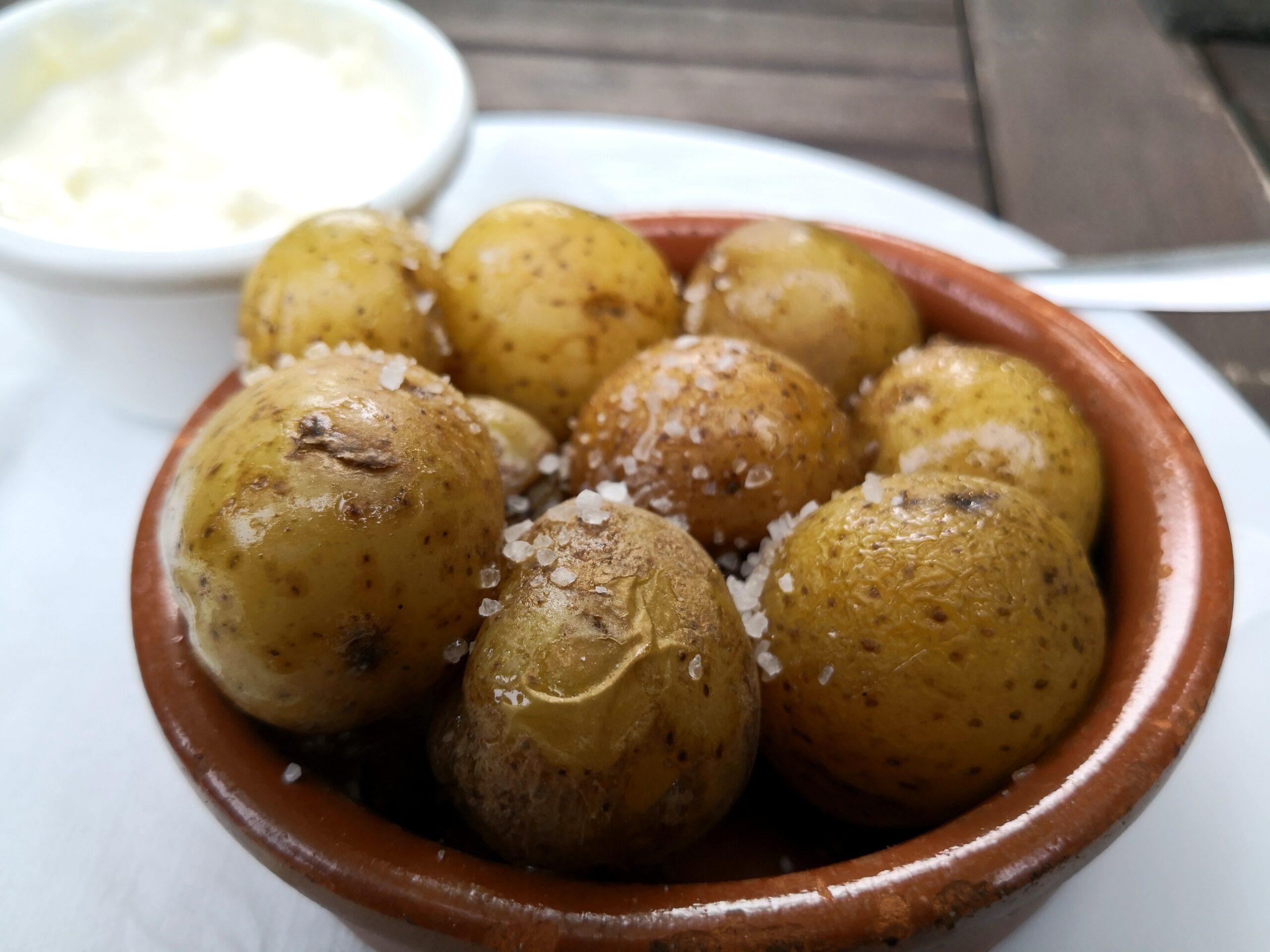
Step 7: Return the pot to the stove on very low heat. This is the crucial step. Let the potatoes sit in the hot pot, shaking them occasionally, for about 5 minutes. You’ll see steam rising as the remaining moisture evaporates. The skins will start to wrinkle. A white salt crust will form on the surface.
Step 8: Remove from heat when wrinkled. The potatoes should look distinctly wrinkled and have a light, dusty white coating. If they don’t, give them another minute or two of drying time.
Serving papas arrugadas the Canarian way
Carmen was very specific about this: papas arrugadas are almost always served with mojo sauce. Usually both kinds—mojo rojo (red) and mojo verde (green).
The first time we had them at Carmen’s house, she served the potatoes in a traditional clay bowl, still warm, with both mojos in small dishes on the side. You break open a potato with your fingers, dip it in the sauce, and eat it. The contrast between the salty potato skin and the garlicky, spicy mojo is perfect.
We’ve since learned that papas arrugadas show up alongside almost everything here. They come with grilled fish, with meat dishes, as part of a tapas spread. At our oldest daughter’s school international day, one of the Canarian families brought a huge bowl of them, and they were gone in minutes.
At guachinches—those traditional wine houses we’ve become obsessed with—papas arrugadas are often served as a starter with local cheese and mojo. It’s simple food, but when it’s done right, it’s absolutely delicious.
Finding the right potatoes in Tenerife
If you’re trying this recipe while visiting or living in the Canary Islands, finding the right potatoes is easier than you’d think. Most supermarkets sell bags labeled specifically as “papas para arrugar” or “papas bonitas.”
At the local mercados, you can find papas negras, especially at the Mercado de Nuestra Señora de África in Santa Cruz. They’re more expensive—usually about €3-4 per kilo compared to €1-2 for regular papas bonitas—but they have an incredible nutty flavor that regular potatoes don’t have.
A vendor at the mercado told me that the black potatoes are grown primarily in the north of Tenerife, in areas like La Orotava, where the volcanic soil and climate are perfect for them. They’re actually an ancient variety that’s been grown in the Canaries for centuries.
If you’re trying this recipe outside the Canary Islands, look for small, waxy potatoes with thin skins. New potatoes, fingerlings, or small red potatoes can work as substitutes. They won’t be exactly the same, but they’ll get you much closer than regular baking potatoes.
What to serve with your papas arrugadas
Based on what we’ve learned from Carmen and other Canarian friends, here are the most traditional pairings:
- Fresh fish: Especially vieja, cherne, or any of the local catches. The saltiness of the potatoes complements the delicate fish perfectly.
- Grilled meats: Pork, chicken, or rabbit. At family gatherings, we’ve seen huge platters of grilled meat served with bowls of papas arrugadas on the side.
- Local cheese: A chunk of queso de flor or aged goat cheese, some papas arrugadas, and both mojos make a perfect simple lunch.
- As part of a larger spread: At fiestas and celebrations, papas arrugadas are usually part of a bigger table of food—alongside croquetas, olives, bread, and other tapas-style dishes.
In our house, we’ve started making them as a regular weeknight side dish. My middle daughter, who’s normally picky about vegetables, will eat these potatoes without complaint. My oldest daughter has even made them herself a few times, usually when her friends come over—apparently they’re impressed by “authentic Canarian food.”
The mojo situation
I can’t write about papas arrugadas without addressing mojo sauce, because honestly, they’re a package deal. The potatoes are good on their own, but with mojo? They’re transcendent.
Carmen makes her own mojo, both red and green, and the first time she brought some over with the potatoes, I understood why people are so passionate about this sauce. The mojo rojo has this smoky, slightly spicy flavor from dried peppers. The mojo verde is bright and herby with cilantro and parsley.
She’s promised to teach me her mojo recipes next, which I’m both excited and nervous about. Apparently every Canarian family has their own version, with slight variations in ingredients and proportions. It’s another one of those things that seems simple but has layers of technique and tradition behind it.
For now, we buy mojo at the supermarket—there are good commercial versions available, especially the Salsas Asolan brand that several local friends have recommended. But I’m looking forward to learning to make my own.
Why this recipe matters to us now
Learning to make proper papas arrugadas was about more than just getting a recipe right. It was one of those small but significant moments in our integration into life here.
When Carmen took the time to show me how to do it properly, she was sharing something important. These aren’t just potatoes—they’re part of the daily fabric of Canarian life. Getting them right meant we could serve them to Canarian friends without embarrassment. It meant we could bring them to school potlucks and neighborhood gatherings. It meant we were learning to cook the way people actually cook here.
Now, when we have people over for dinner, I make papas arrugadas without thinking twice about it. They’ve become as normal in our kitchen as they are in Canarian homes. My daughters ask for them specifically. We judge restaurants partly on whether their papas arrugadas are properly wrinkled.
It’s funny how something as simple as getting a potato recipe right can make you feel more at home in a place. But that’s exactly what happened. Every time I make these now, I think about Carmen patiently showing me the drying step, explaining why the salt matters, telling me about her grandmother’s method.
That’s the real recipe, I think—not just the ingredients and steps, but the connection to the place and the people who’ve been making these potatoes for generations. We’re still learning, still making mistakes in other areas of Canarian cooking and culture. But at least we’ve got the papas arrugadas figured out.